
| 일 | 월 | 화 | 수 | 목 | 금 | 토 |
|---|---|---|---|---|---|---|
| 1 | 2 | 3 | 4 | 5 | 6 | 7 |
| 8 | 9 | 10 | 11 | 12 | 13 | 14 |
| 15 | 16 | 17 | 18 | 19 | 20 | 21 |
| 22 | 23 | 24 | 25 | 26 | 27 | 28 |
| 29 | 30 | 31 |
- HPV
- 성병
- 폐경생리
- 폐경원인
- 자궁경부암 검사
- std12종
- 성병 증상
- 성병증상
- 매독
- 자궁경부암 치료
- 폐경증상
- 질염
- 폐경식단
- 마라나노텍
- 방광염
- 폐경에 좋은 음식
- 폐경기
- 소아비만
- STD검사
- 자궁경부암
- 자궁경부암 증상
- 질염 증상
- 폐경
- std
- 당뇨병
- 질염증상
- 폐경나이
- 자궁경부암 원인
- 성병원인
- 성병검사
- Today
- Total
HealthMARA님의 블로그
10세 미만 어린이 4명 중 1명 '당 과잉 섭취' – 우리 아이는 안전할까요? 본문
자녀를 키우는 부모님들이라면 절대 놓쳐선 안 될 질병관리청의 최신 분석 결과를 소개해 드리려고 합니다.
최근 발표된 '국민건강영양조사'에 따르면, 우리나라 1~9세 어린이들의 당 섭취 수준이 전 연령대 중 가장 높은
것으로 나타났습니다.
2026년 현재, 우리 아이들의 건강에 어떤 빨간불이 켜졌는지 자세히 살펴보겠습니다.
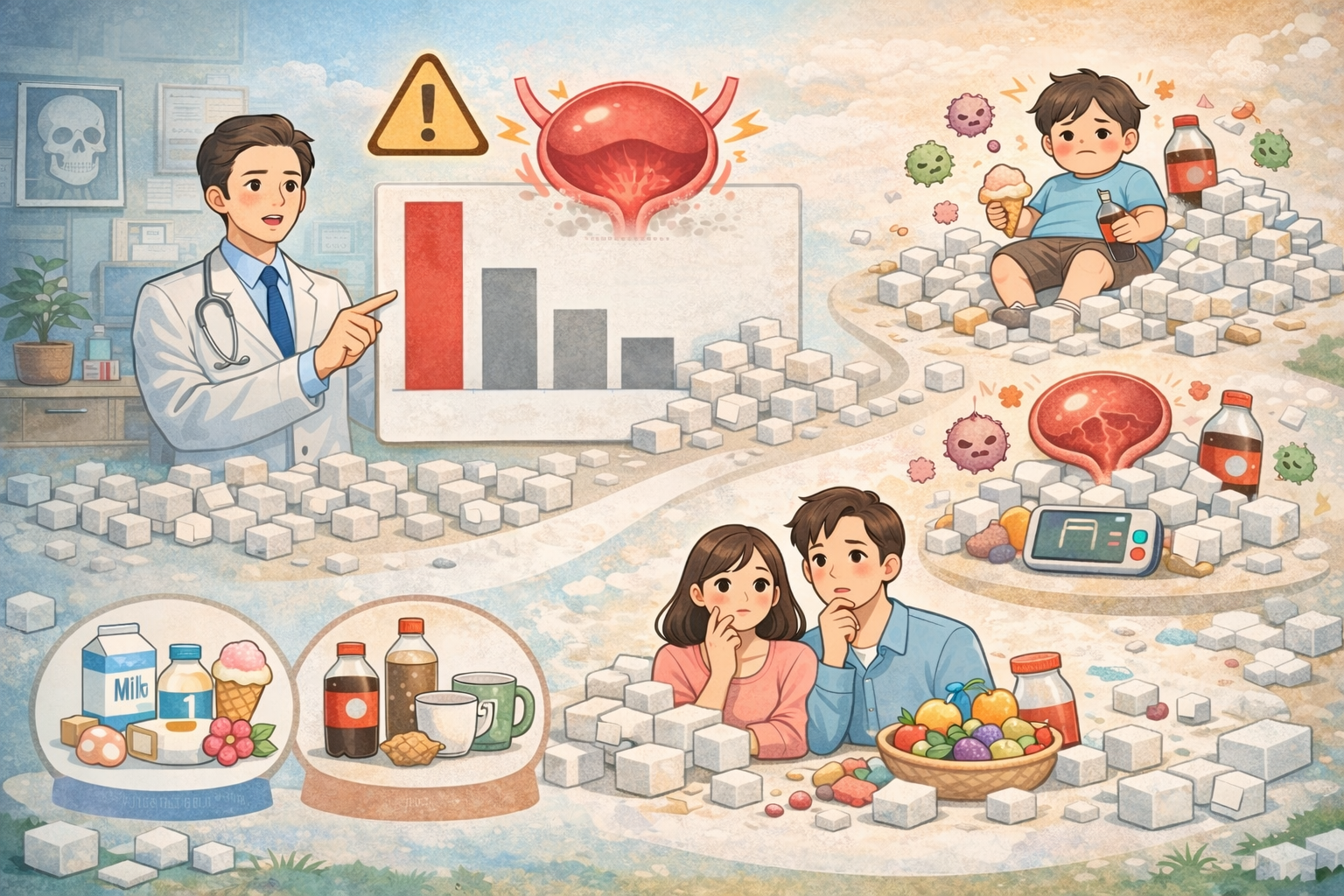
- 전 연령대 중 1위, 10세 미만 어린이의 '당 과잉' 실태조사 결과에 따르면,
'1~9세 어린이의 26.7%'가 당을 과잉 섭취하고 있는 것으로 나타났습니다.
이는 국민 전체 평균인 16.9%를 크게 웃도는 수치입니다.연령대당 과잉 섭취자 비율
1. 1~9세 어린이 26.7% (가장 높음)
2. 10대 17.4%
3. 20대 17.0%
전체 평균 16.9%
'당 과잉'이란?
하루 전체 에너지 섭취량 중 당으로 얻는 에너지 비율이 20%를 초과하는 경우를 말합니다.
- 우리 아이들은 무엇을 통해 당을 섭취할까?
연령별로 당을 섭취하는 주된 경로(급원)가 다르다는 점도 주목해야 합니다.
1. 1~9세: **유제품 및 빙과류(아이스크림 등)**가 1위, 과일류가 2위였습니다.
2. 10~40대: 탄산음료나 커피, 차와 같은 음료류를 통해 가장 많이 섭취합니다.
3. 50대 이상: 과일류를 통한 섭취가 높았습니다.특히 어린 시절에는 아이스크림이나 가공 유제품을 통해 단맛에
길들여지기 쉬운데, 전문가들은 이 시기의 식습관이 평생의 미각을 결정한다고 경고합니다.
- '어릴 때 단맛'이 무서운 이유 (성인병의 씨앗)
서울성모병원 소아청소년과 전문의에 따르면, 생애 초기는 단맛에 대한 선호도가 결정되는 골든타임입니다.
1. 미각의 고착화: 강한 단맛에 반복 노출되면 자연 식재료의 맛을 싱겁게 느끼게 됩니다.
2. 질환 위험 증가: 지나친 당 섭취는 소아 비만, 지방간, 고지혈증, 당뇨 등 만성 질환으로 이어집니다.
3. 수정의 어려움: 한 번 형성된 미각은 성인이 되어서도 바꾸기가 매우 어렵습니다.
- 우리 아이 '당 다이어트'를 위한 실천
최근 정부 차원에서도 '설탕 부담금' 도입이 논의될 만큼 당 과잉 섭취 문제는 심각한 사회적 이슈가 되었습니다.
가정에서는 다음과 같은 노력이 필요합니다.
1. 가공식품 뒷면 영양성분표 확인하기: 당 함량을 확인하는 습관을 들여주세요.
2. 물 마시는 습관 기르기: 주스나 요구르트 대신 시원한 물이나 보리차를 권해 주세요.
3. 간식은 가공되지 않은 자연식으로: 빙과류 대신 얼린 과일이나 견과류를 활용해 보세요.
우리 아이의 건강한 미래는 지금 입으로 들어가는 음식에서 시작됩니다.
오늘부터 아이의 간식 바구니에서 설탕 비중을 조금씩 줄여보시는 건 어떨까요?
1 in 4 Children Under 10 Consume Excessive Sugar – Is Your Child Safe?
According to the latest "National Health and Nutrition Examination Survey" results (as of February 2026), the sugar intake of children aged 1–9 has reached a critical level—the highest across all age groups.
Let's dive into the details of this "red light" on our children's health.
- Children Under 10 Rank #1 in Excessive Sugar Intake
The survey reveals that 26.7% of children aged 1–9 are consuming an excessive amount of sugar.
This is significantly higher than the national average of 16.9%.
1. Children (1–9 years) 26.7% (Highest)
2. Teenagers (10–19) 17.4%
3. Young Adults (20s) 17.0%
National Average 16.9%
What is "Excessive Sugar"?
It refers to cases where the energy derived from sugar exceeds 20% of the total daily energy intake.
- Where is all this sugar coming from?
The primary sources of sugar vary significantly by age
1. Ages 1–9: Dairy products and frozen desserts (ice cream, etc.) were the top sources (14.49g), followed by fruits.
2. Ages 10–40: Drinks and teas (including carbonated beverages) were the main culprits.
3. Ages 50+: Most sugar was consumed via fruits.Experts warn that since children are frequently exposed to sugar through processed dairy and ice cream, they are becoming conditioned to "strong sweetness" from a very young age.
- Why Early Sugar Habit is Dangerous (The Seed of Chronic Disease)
According to pediatric experts at Seoul St. Mary’s Hospital, early childhood is the "golden time" when a person’s preference for sweetness is determined.
1. Taste Bud Conditioning: Repeated exposure to intense sweetness makes natural, fresh ingredients taste bland.
2. Increased Health Risks: Excessive sugar leads to obesity, fatty liver, hyperlipidemia, and diabetes.
3. Hard to Change: Once these taste preferences are formed in childhood, they are incredibly difficult to reverse in adulthood.
- Practical Tips for Your Child's "Sugar Diet"
With the government even discussing a "Sugar Tax" to curb consumption, it is clear that sugar intake is now a major public health priority. Here is how you can help at home
1. Check the Nutrition Label: Make it a habit to check the "Sugar" content on the back of processed food packages.
2. Encourage Water Over Juice: Replace sugary yogurts or juices with water or unsweetened barley tea.
3. Choose Natural Snacks: Opt for frozen fruits or nuts instead of processed ice cream and candies.
Your child’s healthy future starts with what they eat today.
How about reducing the sugar in your child’s snack starting today?
출처 ( Citation ) : https://www.chosun.com/national/welfare-medical/2026/02/10/MLFSWA2EYVH3LLWJN3NLI6XHVQ/
'일상 정보' 카테고리의 다른 글
| 아침엔 액셀, 저녁엔 브레이크! 자율신경 리듬 맞추는 법 (0) | 2026.03.02 |
|---|---|
| 냉동실에 '이것' 하나만 얼리세요! 500mL 페트병의 놀라운 발 건강 기적 (0) | 2026.02.20 |
| 집이 최고의 헬스장! 전문가 3000명이 뽑은 평생 운동 Top 3 (0) | 2026.02.05 |
| 단순한 건망증? 치매 5년 전 찾아오는 '골든타임' 경도인지장애 (0) | 2026.01.23 |
| KAMDA Conference 2025 (0) | 2025.10.28 |


